Occupant Comfort
Seats near the glass should not be the ones people avoid at the brightest part of the day.

Commercial architectural window film
Hot zones, screen glare, fading concerns, privacy needs, and inconsistent glass appearance can affect customers, employees, and property decisions. Tint King starts with the building, not a generic product pitch.
Central Indiana site assessment, physical film samples, and a property-specific scope.
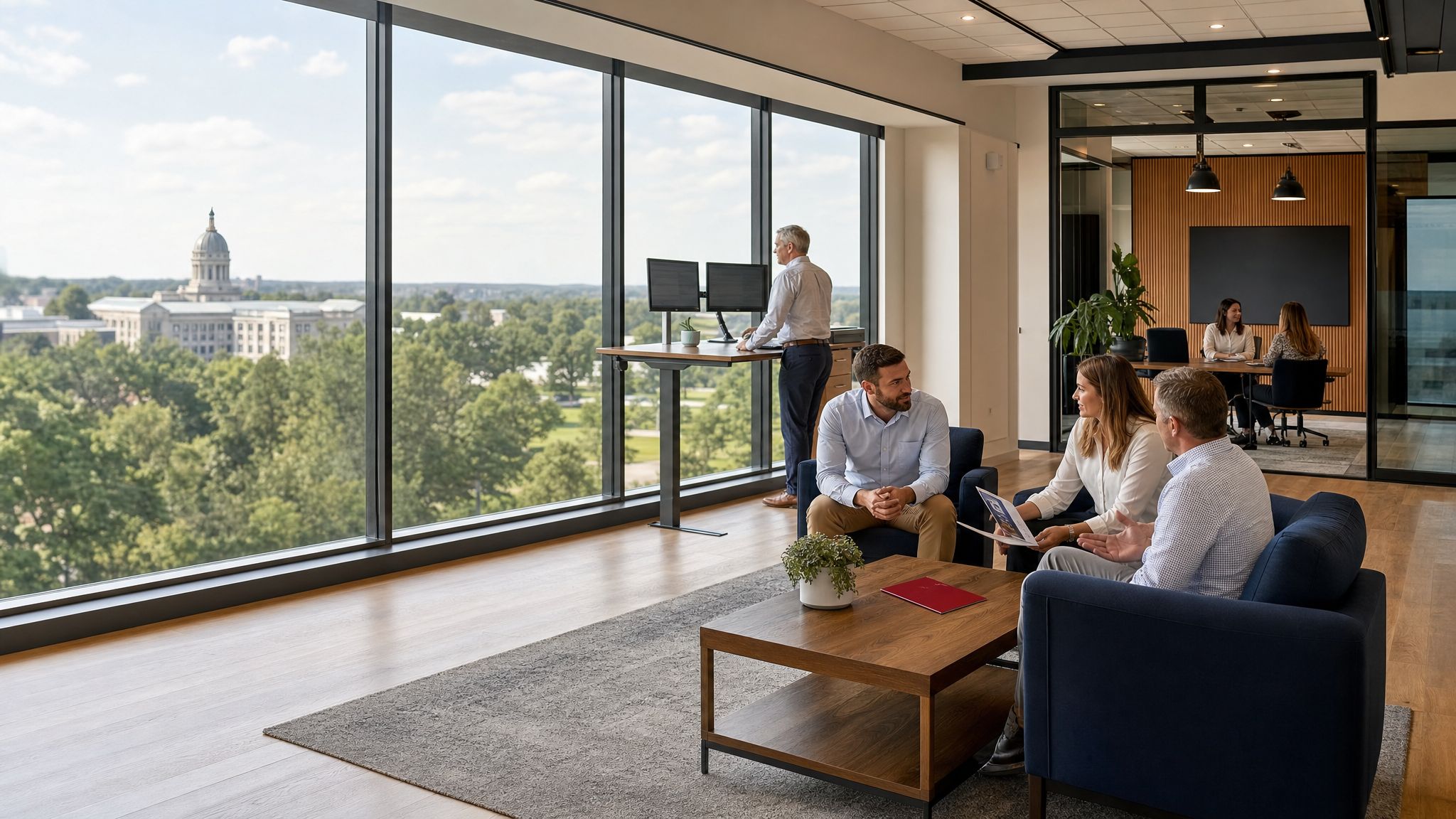
The cost is not limited to temperature
A bright facade may be part of the building's value, but harsh exposures can create workarounds: closed shades, abandoned desks, difficult screens, uneven comfort, and interiors taking direct sun.
Seats near the glass should not be the ones people avoid at the brightest part of the day.
Glare and hot spots can change where people work, meet, wait, shop, or dine.
Film choice affects both the interior experience and the exterior character of the glass.
A site assessment before a film decision
Exposure, glass, floor, room use, view, privacy, and exterior appearance can change across one building. Tint King reviews the property and uses physical film samples to make those tradeoffs visible.
The resulting scope is built around the project instead of applying one generic film across every elevation.

Product families follow the property goal
Tint King is authorized for the full SunTek, Hüper Optik, and Edge Architectural lines. The assessment narrows 106 films to the choices that fit the glass, appearance, performance goal, and warranty.
Compare performance and appearance against the actual glass, elevation, and interior use.
Use film to create visual separation and a more intentional glass design without assuming nighttime privacy.
Match film thickness and any attachment system to the complete glazing condition and protection goal.
Move recurring scratching and tagging exposure to replaceable film on eligible surfaces.
Exact performance, compatibility, warranty, and application details depend on the selected product and glazing system. Tint King confirms them in the written recommendation.
A clearer commercial decision
Property teams need a recommendation that can be discussed, compared, and approved.
Identify the affected areas and whether comfort, glare, privacy, fading, appearance, or another clearly defined need is driving the project.
Assess the actual glazing and exposures before selecting a film family or promising a result.
Use physical film samples to understand appearance and tradeoffs at the property.
Receive a project-specific recommendation that gives decision makers a clear basis for the next conversation.
Start with the property
Send the property name, ZIP code, and contact details. Tint King will follow up about the site assessment and the affected areas.
Contact saved
Tint King can follow up now. Add a few details to make the first response more specific.
Straight answers
Commercial window film should be specified against the actual glass, exposure, and operational goal.
Commercial projects begin with a site assessment. Share the property ZIP or call the team to discuss the appropriate next step.
Possibly, but it should not be assumed. Glass, exposure, use, view, and exterior appearance can differ across elevations and floors.
Tint King compares current SunTek and Hüper Optik architectural options. Exact product availability and specification are confirmed for the property.
Start with the property name, ZIP code, affected areas, and the business problem the glass is creating. Tint King will use that to prepare the first conversation.
Start with the property
Bring Tint King into the property before another cycle of glare, shifting comfort, or closed-off space becomes normal.
Share the project ZIP so Tint King can review the location and schedule the right next step.